When I think of college, a very clear image comes to
view. I see sidewalks full of students,
backpacks, study groups and fliers with tabs on the bottom. I also see academic buildings and dorms. I see a closed community, a quad, a cafeteria,
and a “University drive” leading to the admissions building. This is the image of a “campus,” and an
accurate description of many colleges and universities around the world. Columbia College Chicago advertises its
slogan “Create Change,” and it would seem those words go to work immediately as
one is introduced to Columbia’s “campus.”
I
still remember my orientation day here at Columbia. I felt like a tourist using a map to find my
way around Chicago to Columbia’s campus.
I was shocked to find that the description of my idea of college did not
exist. Instead I was sent down Wabash Avenue
to see buildings scattered all around.
People on the sidewalk didn’t look like students, and there was no “University
drive.” I entered the 1104 S. Wabash
building expecting the familiar look of a school building. What I saw was a stage, a café, and a
computer lab suspended above. Up the
elevator I went. Finally, I saw
classrooms as I made my way to the tour group.
Wait, these don’t look like class rooms.
I jokingly asked my group leader, “Is this a school or a hotel?” He answered, “It used to be.” It was official; college was not what I
expected.
It
is true; many of the buildings at Columbia College Chicago are old office
buildings, banks, and hotels. This sets
up all kinds of metaphors that can be linked to Columbia, but mostly it is a
place that is constantly changing. The
scattered map of buildings makes Columbia feel more like a district, or a part
of town, rather than a college. When I
am at Columbia, I am not a student on a campus; I am a member of the community. The purpose of college is to prepare individuals
with knowledge and skills necessary to operate in the real world. Columbia seems to have created a community
where its students are allowed to experience the “real world,” but on easy
mode. We are all given opportunities to
have our work shown, to exercise our skills, and even to have our work
purchased.
Art
galleries, everywhere. Almost every
building has one. They are like mini
museums and showcase some of the best art Columbia College Chicago has to
offer. These galleries often stay true
to a specific theme. I spent some time
at 618 S. Michigan Avenue on the second floor at the “Collected” gallery. The theme of this gallery is that each piece was
purchased by Columbia College Chicago.
As I
entered the exhibit, I noticed a plethora of attention grabbing pieces.
The piece that I was drawn to first was what appeared to be a cardboard cutout
of a man with a giant head alongside an equally large beer bottle. The
piece was titled “Drunk City” and is by an artist simply known as “Don’t
Fret.” I was sucked into this particular piece first because of its
size. The art itself looked as if it were drawn and colored by a talented
eight year old with a set of Crayola markers. Perhaps this was a little
too peculiar for me to begin my exhibit trek. I felt as if I had
cannonball’d my way into the frigid waters of abstract art.

The next piece that caught my
eye was a 78” x 54” canvas oil painting. Allow me to paint the canvas on
your mind a retelling of “Renunciation,” by artist Brian Willard. A group
of well-dressed but bitter looking elderly people are gathered at the dinner
table, which is arranged in a “last supper” style. The crimson walls
blend well with the traditional long wooden table presenting a variety of
freshly slaughtered animals such as a goose and a pig. On the center of
the table is a sad woman who appears to be filleting her own skin. This
brings our attention back to the other dinner guests who are focusing their
bitter looks on this woman. I was able to pick up on the message right
away and found myself looking at the piece for several extra minutes. The
art was very well drawn and painted. Traditional enough to please the
casual art fan, but definitely unusual enough to fit in with the rest of the
“Collected.”
At the end of the gallery was a
small dark room playing the exhibit’s one and only video presentation. I
sat down and watched “The Living Fields” for as long as I could. The
volume was almost nonexistent. It seemed to me that this film relied
heavily on audio, so it’s a shame that I could not hear a word of it even when
standing right next to the speaker. I was unimpressed with the visuals
and bored within minutes. All I was able to see were pieces of a naked
male figure laying on newspapers and a man, from the chin down, talking.
After giving this film the old college try, I escaped the dark room and ended
my tour.
Aside from the video
presentation, I was generally impressed with the “Collected.” As a film student, I will always judge works
of my peers more harshly. However, I had
to rely on instinct to assess the rest.
I am not an art critic, but I’ve realized that my presence at Columbia’s
“Collected,” instantly turned me into a test audience member for these
students. The art work that makes up the
“Collected” has already proven worthy of Columbia College Chicago’s Department
of Exhibition and Performance Spaces.
This could be seen as an equivalent of having your work purchased by a
museum, but a museum does not make a piece good or interesting; the people
do. I was acting as a test subject that
affects the integrity of each artist. My
opinions and critiques are examples of a reaction that would come from the
general public. Columbia College Chicago
does not set up art galleries to show off student work like a picture on the
refrigerator. The art on display is
being subjected to further evaluation by a controlled version of the general
public.
The more I explore the Columbia
district outside of class, the more I start to see the unique opportunities we
have here. Non-art students do not
always get the same mini exposure tests that we get. Law enforcement students do not have the
chance to patrol around campus making real arrests. Accountants do not get to set up an office
and work with real clients. Columbia
College Chicago gives students opportunities to practice their skills in
public. The theater department puts on
real performances, and opens the doors to anyone. As a future actor, I felt as if it were my
duty to be a part of the audience for a student play.
I stopped by the 11th
Street Theater and watched an authentic student work. The play was called “Ice Cream” and was
written by Carolyn Churchill, but directed, and performed by students.
“Ice Cream,” tells the story of two couples, an American
man and wife and an English brother and sister. They are implicated in each
other's lives more than any of them would wish, and their respective love
affairs with each other's countries prove difficult to explain.
We
are introduced to the American couple first.
They appear to be a traditional white, middle class couple vacationing around
national parks. The play quickly becomes
confusing because we are introduced to the other two characters separately and
none of these people appear to have any connection. Throughout the play the characters experience
some major events including a car crash and a murder. Finally, the cast gathers together at a Christmas
party and we understand why they all belong in the same story.
It
was a bit anti-climactic because we did not witness any of the big events. Scenes began right after the action and we
only get to watch the reaction of the characters. I understood they wanted the audience to
focus on the reactions, and that to actual events were not as important, but if
someone gets killed in a story, I want to see it! Actually, it was interesting to see how these
seemingly normal people try to deal with covering up a murder. The result was funny at times especially when
you see how stereotypically “American” the American couple is because it was
written by a British woman. The super
cheesy Christmas sweaters were a nice touch.
The
story ended on an awkward note, but actually, I was a bit relieved. The acting was okay at times, but mostly
poor. The sets were very basic, and the
story itself dragged a lot. I am glad my
status at Columbia got me in for free. “Ice
Cream” was intended to be an exercise for advanced theater students to put on a
play all by themselves. As an actor, I
am glad I got to see an example of other actors trying to act around a poor
script, but as a test audience member, I would have broken out the rotten tomatoes.
My
experience in the 11th street theater taught me that there is a
difference between being a student and being part of the Columbia College
collective. As a student, I am
constantly being challenged by my peers to reach the same level of status. My goal is to test my ability by presenting
my work to others in a very real, but very student, like way. I can also use others to accurately gage my
own skills and try to take some useful information out of the experiences. As a part of the collective, my goal is to
experience as much as I can. Other
students rely on the rest of the college to provide feedback. This feedback is used to gage how well their
skills will be received on a much larger scale.
Columbia
College Chicago offers a unique opportunity to artists that are intending a
serious career in their major. The
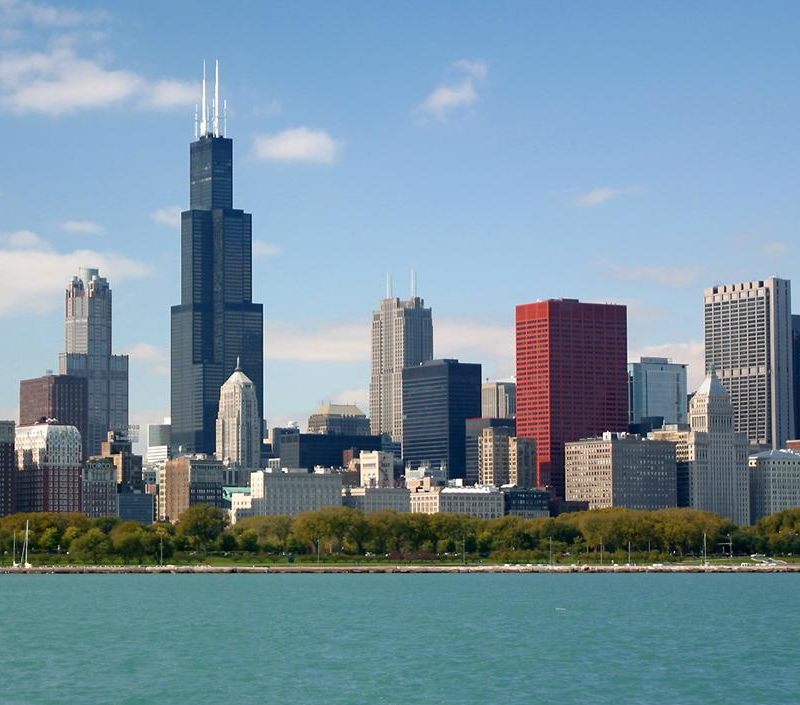
campus is not a typical campus, but instead it blends into the city. This is a metaphor that Columbia has created
a safe, but public environment for students to showcase their work to a controlled
version of the public. I understand my responsibility
as a student and as a member of the collective.
As I venture fourth into the real world, I now understand and appreciate
the “real life” experiences I shared while attending Columbia College Chicago.


